
Arthur Quphe, CEO of Dhahabu Consulting, recently represented the company at the Infrastructure Africa Conference & Exhibition 2026 held on 2–3 March 2026 at the Cape Town International Convention Centre. During the event, Mr Quphe participated as a panellist on the topic “Securing Africa’s Future: Innovative Solutions for Sustainable Water Infrastructure Development.”
The conference brought together policymakers, development finance institutions, infrastructure investors, engineers, and advisory firms from across the continent to discuss how Africa can accelerate infrastructure delivery. The forum focused on practical issues such as project preparation, financing structures, and public-private collaboration to move infrastructure projects from concept to implementation.
During the panel discussion, Mr Quphe highlighted that Africa possesses the innovation, expertise, and ambition required to deliver world-class infrastructure, but emphasised that the success of projects depends on strong fundamentals.
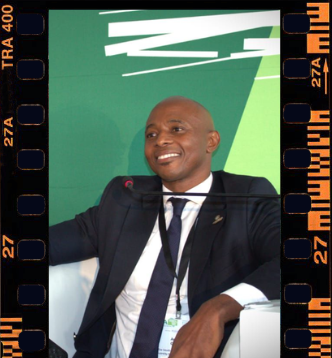
“Infrastructure must be properly prepared, financially viable, and professionally managed. Without bankable projects and disciplined execution, infrastructure plans remain ambitions rather than realities.”
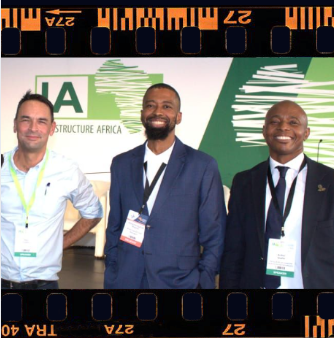
He noted that across many African countries, infrastructure challenges particularly in water supply, sanitation systems, and climate-resilient water management are not simply technical problems but also governance and implementation challenges.
Mr Quphe stressed three critical priorities for improving infrastructure delivery across the continent:
1. Strong project preparation and bankability
Many infrastructure initiatives fail to reach implementation due to weak feasibility studies or unclear funding structures. Proper project preparation ensures that infrastructure projects attract investment and move efficiently through procurement and construction phases.
2. Governance and accountability in delivery
Robust governance frameworks, transparent procurement processes, and skilled professional oversight are essential to ensure infrastructure is delivered on time, within budget, and to the required quality standards.
3. Long-term maintenance and asset management
Africa’s infrastructure challenges are often worsened by inadequate maintenance. Mr Quphe emphasised that infrastructure investment must include lifecycle planning, ensuring that water systems, pipelines, treatment plants, and distribution networks remain functional and resilient over time.
The discussion comes at a critical time for the continent. Africa faces a substantial infrastructure investment gap, with estimates suggesting the region requires approximately $93 billion annually to meet its infrastructure needs, including water, transport, and energy systems.
Mr Quphe concluded that addressing Africa’s infrastructure challenges will require strong collaboration between governments, private sector partners, and professional advisory firms, particularly those capable of bridging the gap between planning, financing, and project execution.
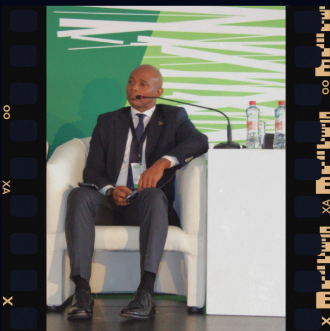
“As professionals in infrastructure advisory and project delivery, firms like Dhahabu Consulting have an important role to play in supporting governments, investors, and project developers to translate infrastructure plans into sustainable, functioning assets that improve lives and unlock economic growth across the continent.”